WE PIPE LLC
In a pre-war Bed-Stuy commercial building with original cast-iron drain branches that have deteriorated, the typical repair involves cutting out the failed sections and replacing them with ABS pipe using no-hub rubber couplings at the cast-iron transitions. New runs can be surface-mounted along masonry walls using pipe clamps, with cleanout access built in at each direction change to comply with NYC plumbing code and facilitate future service.
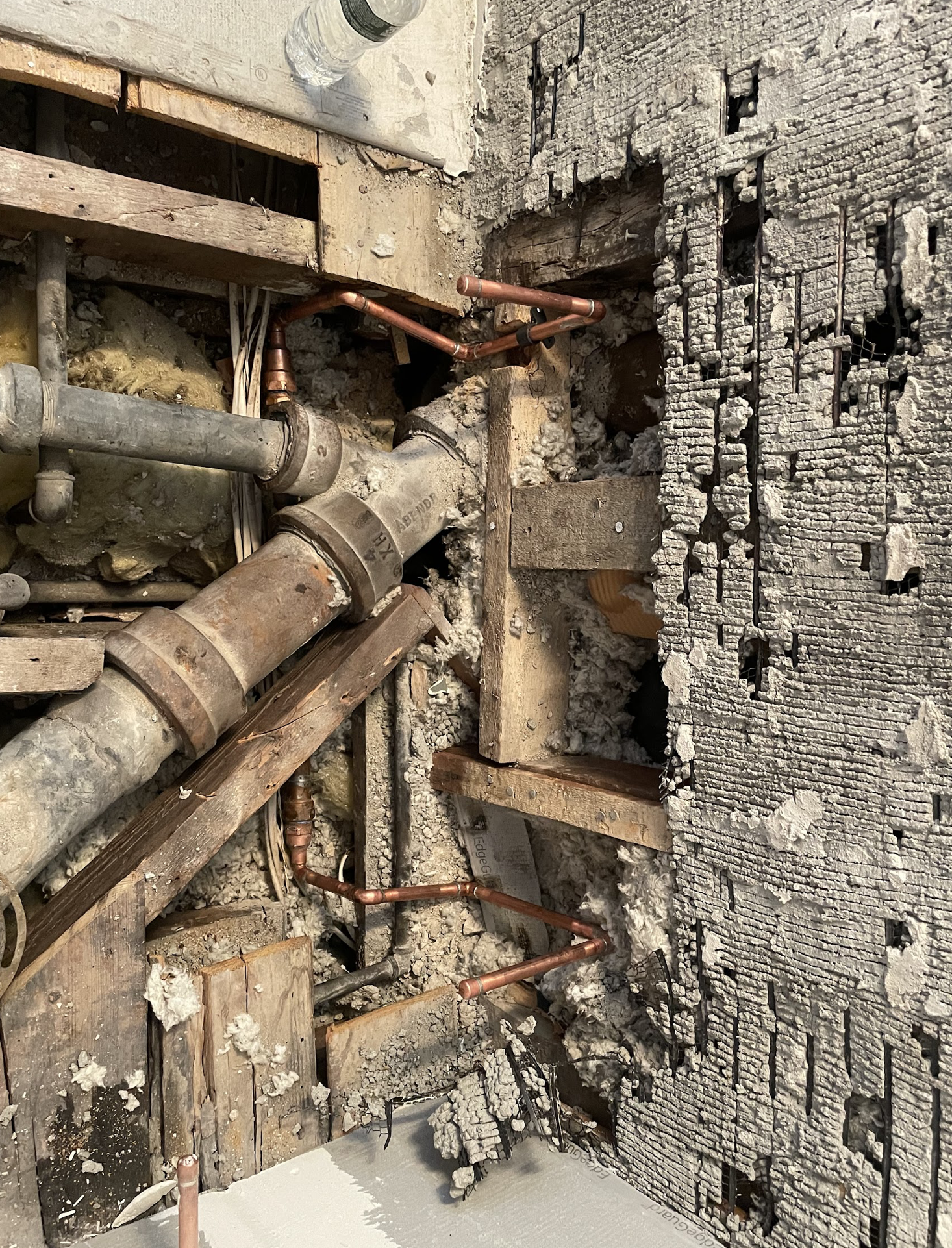
The owner of a pre-war commercial building in Bedford-Stuyvesant, a neighborhood with a large concentration of original early-20th-century masonry construction, called us after recurring drain backups were traced to deteriorated horizontal cast-iron branch lines running along the interior brick wall. The original branches had been in service for over 80 years and had corroded through at several joints, causing both drainage problems and slow water infiltration into the brick. The tenant in the affected space was a food-service operator who needed the drainage restored quickly and reliably.
We assessed the failed cast-iron sections and identified all deteriorated joints and through-corroded sections. Using a reciprocating saw with a metal blade. We cut out the failed cast-iron branches and left the sound portions of the main line intact. New ABS branch lines were fabricated to match the existing drain layout, connecting to the cast-iron main with no-hub rubber couplings at each transition point, the correct method for joining ABS to existing cast iron without soldering or lead work. The new branches were surface-mounted along the brick wall using metal pipe clamps anchored into the mortar joints, and we installed accessible cleanout plugs at each 90-degree change of direction. The system was flow-tested with all branches open, and the owner confirmed the recurring backup had been fully resolved.
Call or send a message. We're based in Ridgewood — we know these buildings.