WE PIPE LLC
Replacing a bathtub in a pre-war Bushwick tenement means cutting into the wood subfloor, cleaning out or replacing the original cast-iron drain connection, and roughing in new copper supply to the new tub footprint. In Bushwick's 3-4 story masonry tenements from the 1890s to 1920s, those cast-iron drain branches have been in service for 100 years, often partially closed from buildup and brittle at the joints, which is what you're dealing with when the subfloor comes up.
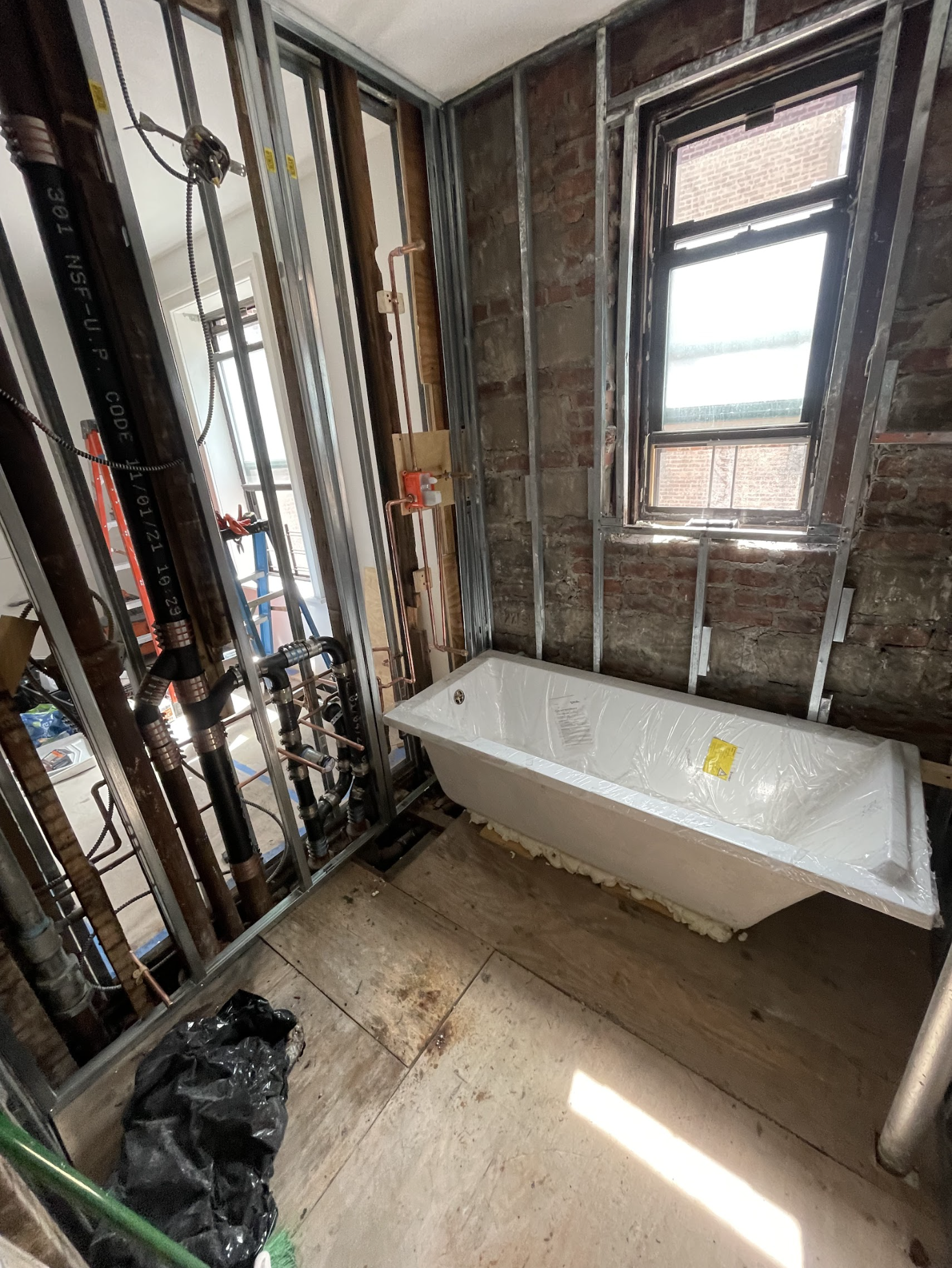
An owner on Menahan Street was renovating a second-floor apartment in a 1910s tenement. The original cast-iron tub was coming out, being replaced with a new soaking tub that was slightly longer and wider. The drain location moved about 10 inches. When we opened the wood subfloor, we found the original cast-iron waste branch had significant buildup, flow was maybe 40 percent of what it should be, and the connection point for the new drain needed to be made into cast-iron that hadn't been disturbed since the building was built. When we cut the cast-iron branch to make the new connection, the cross-section showed scaling that had reduced the bore to about 60 percent of the original diameter. The drain had been running slow for years.
Cut into the wood subfloor at the new drain location, cleaned the old cast-iron branch, and made a new no-hub connection at the correct position for the new tub drain. Set the waste-and-overflow assembly to the new tub, leveled, and pressure tested the connection. The existing galvanized supply stubs to the tub were beyond saving, replaced with new copper from the shutoff in the wall. Left the subfloor opening accessible until the rough-in inspection was done. Tile contractor had a clean substrate by end of day. Used Fernco no-hub couplings throughout for the new connection to the original cast iron. Standard for making new connections in buildings this age.
Call or send a message. We're based in Ridgewood — we know these buildings.