WE PIPE LLC
You can, but in Maspeth's 1920s-1940s attached brick row houses, the bathroom supply is almost always original half-inch galvanized that's been narrowing from the inside for 60 to 80 years. Running multiple shower outlets off galvanized that old means low pressure, uneven flow, and a system that gets worse every year. Before any multi-head valve goes in, the galvanized supply to that bathroom has to be replaced with copper. That's part of the job, not an upsell.
An owner on 69th Street wanted to upgrade a standard shower to a three-outlet system: rain head, body jet, and handheld. The house was a 1930s attached brick row house with original galvanized supply, we ran a pressure test at the bathroom branch, 28 PSI at the showerhead with the single outlet open. Running three outlets simultaneously would have been a trickle. The galvanized had been closing from the inside for decades and the effective bore was a fraction of what the pipe label said, we also found the existing shutoff in the wall had been painted over at least twice and would not close fully. The branch could not be isolated for future service without going to the main.
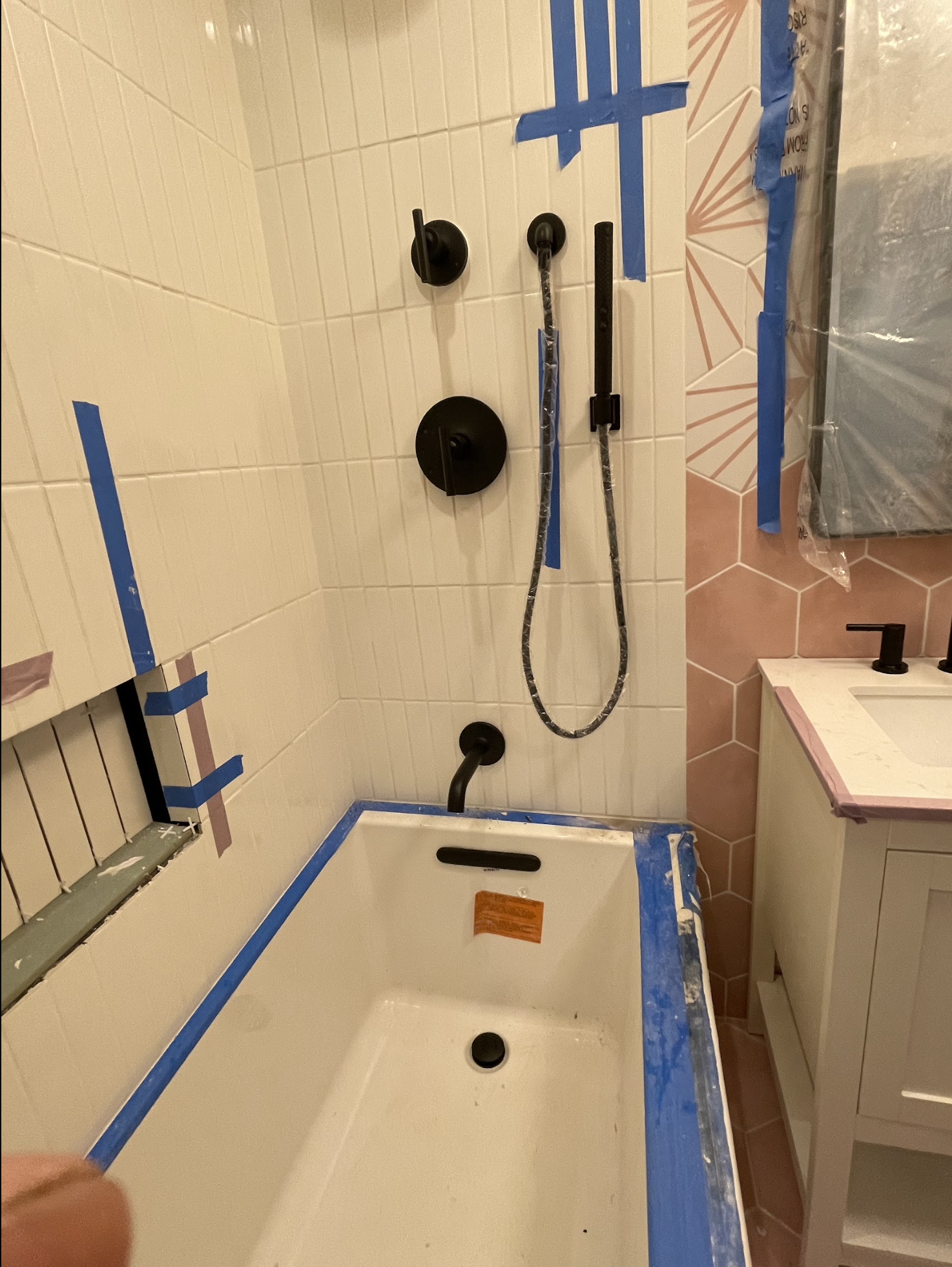
Ran new three-quarter-inch copper from the building main up through the wall to the bathroom, replacing the galvanized hot supply entirely on that branch. Installed a thermostatic pressure-balance valve body with three independently controlled outlets. Roughed in the rain head supply at ceiling height, the body jet at 52 inches, the handheld at 72 inches, all positioned before tile per the homeowner's layout. Pressure tested at 80 PSI with all three outlets open simultaneously. Held clean. The finished system runs at full pressure on all three outlets. The original galvanized couldn't have handled one. Installed a Grohe Grohtherm 3000 thermostatic trim over the new valve body. Added a full-port ball shutoff accessible from a small access panel in the adjacent closet wall.
Call or send a message. We're based in Ridgewood — we know these buildings.