WE PIPE LLC
In Ridgewood's pre-war two-families, attached brick buildings from the 1905–1930 era, wood subfloors, party walls shared with the neighbor, a bathroom renovation means dealing with original galvanized supply that's typically corroded from the inside, a cast-iron waste branch that may need cleanup at the connection, and a toilet flange that's often sitting too high from previous floor layers. None of this is unusual in these buildings. It's what you find when you open the walls.
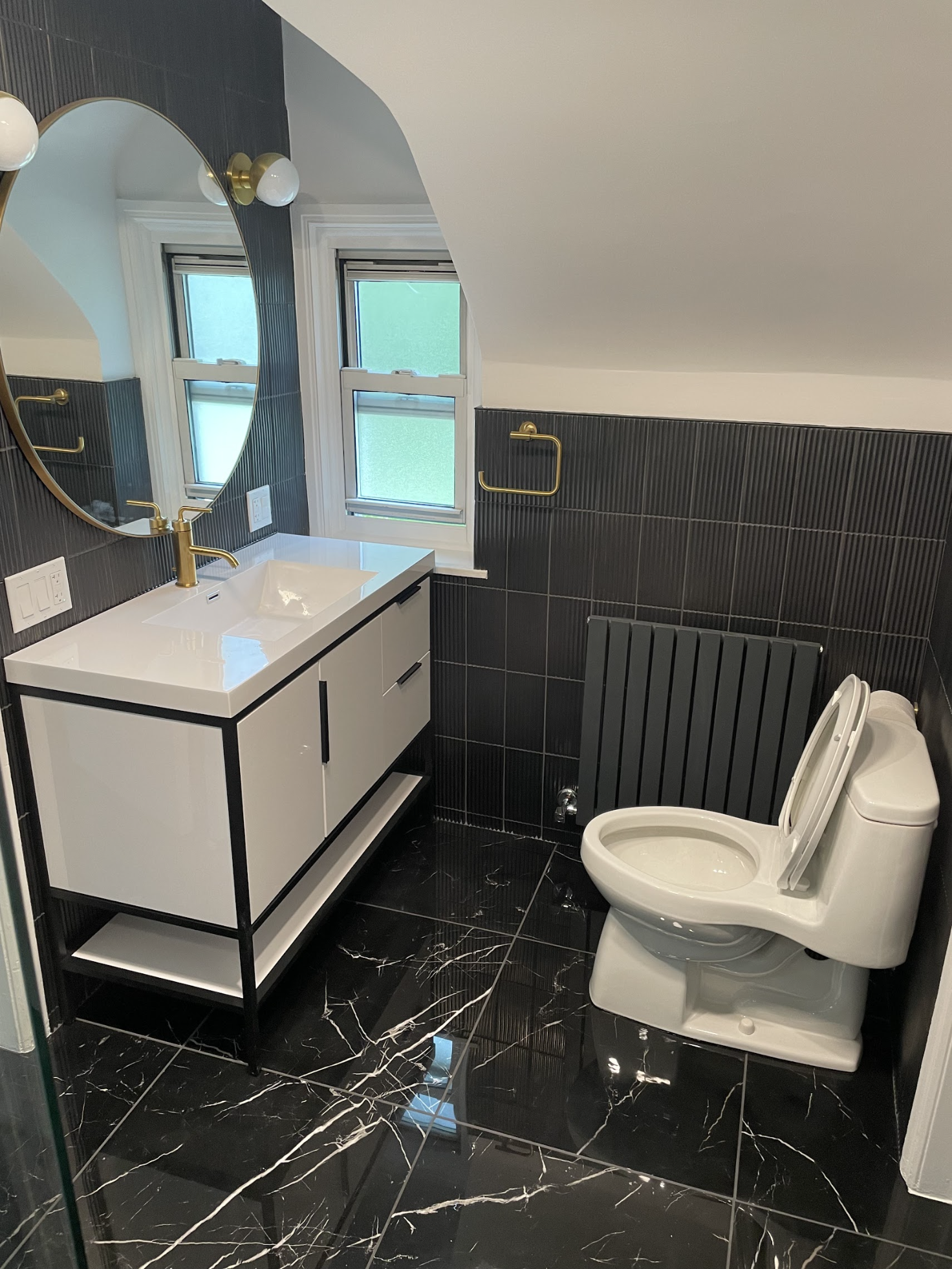
The owner of a pre-war two-family on Onderdonk Avenue was gutting the second-floor bathroom. The unit had never been touched since the building went up. When the tile contractor pulled the old tile, they found the galvanized hot supply branch to the bathroom had almost no flow. Decades of mineral buildup had reduced the effective bore to nearly nothing. The toilet flange was also sitting two inches above the subfloor from previous tile layers that had been stacked without ever pulling the flange down, we also found a compression union at the galvanized-to-copper transition. It was weeping at the fitting body, not enough to drip but enough to stain the adjacent framing.
We removed the galvanized branch back to where it joined the copper riser, a previous owner had updated the risers but left the bathroom branches original. Ran new half-inch copper from the riser to the vanity and toilet positions, installed new quarter-turn angle stops at both fixture locations. Pulled the old toilet flange and reset it at the correct height for the new tile: flush with finish floor, properly anchored to the subfloor. Set the vanity drain connection to the existing cast-iron stack with a new P-trap at proper slope. Trim-out after tile: connected the vessel sink faucet and drain, set the toilet, confirmed all shutoffs closed and opened cleanly. No callbacks. Pressure tested supply rough-in at 100 PSI before the tile contractor closed the backer board. No movement at any fitting.
Call or send a message. We're based in Ridgewood — we know these buildings.