WE PIPE LLC
The top-floor bathroom in a Ridgewood row house runs cold first because the hot water pipe running up three floors from the basement cools completely between uses overnight. In Ridgewood's pre-war 3-story row houses, the water heater is always in the basement, so by morning that standpipe has chilled and the first person to turn on the tap is flushing 60–90 seconds of cold standing water before anything warm arrives. A point-of-use electric heater under the third-floor vanity solves the problem at that fixture without touching the rest of the building's plumbing.
A landlord on Woodbine Street had a persistent complaint from the third-floor tenant: no hot water at the bathroom sink for the first 60–90 seconds every morning. The water heater was in the basement, a long vertical run up through three floors to the top bathroom. The landlord had already replaced the water heater thinking that was the cause. It wasn't. The new heater made no difference. The problem was the length of the pipe and the standing water in it cooling overnight, standard physics in a three-story pre-war building. We timed the morning wait at 48 seconds at the bathroom tap before starting any work. That confirmed the diagnosis before anything was touched.
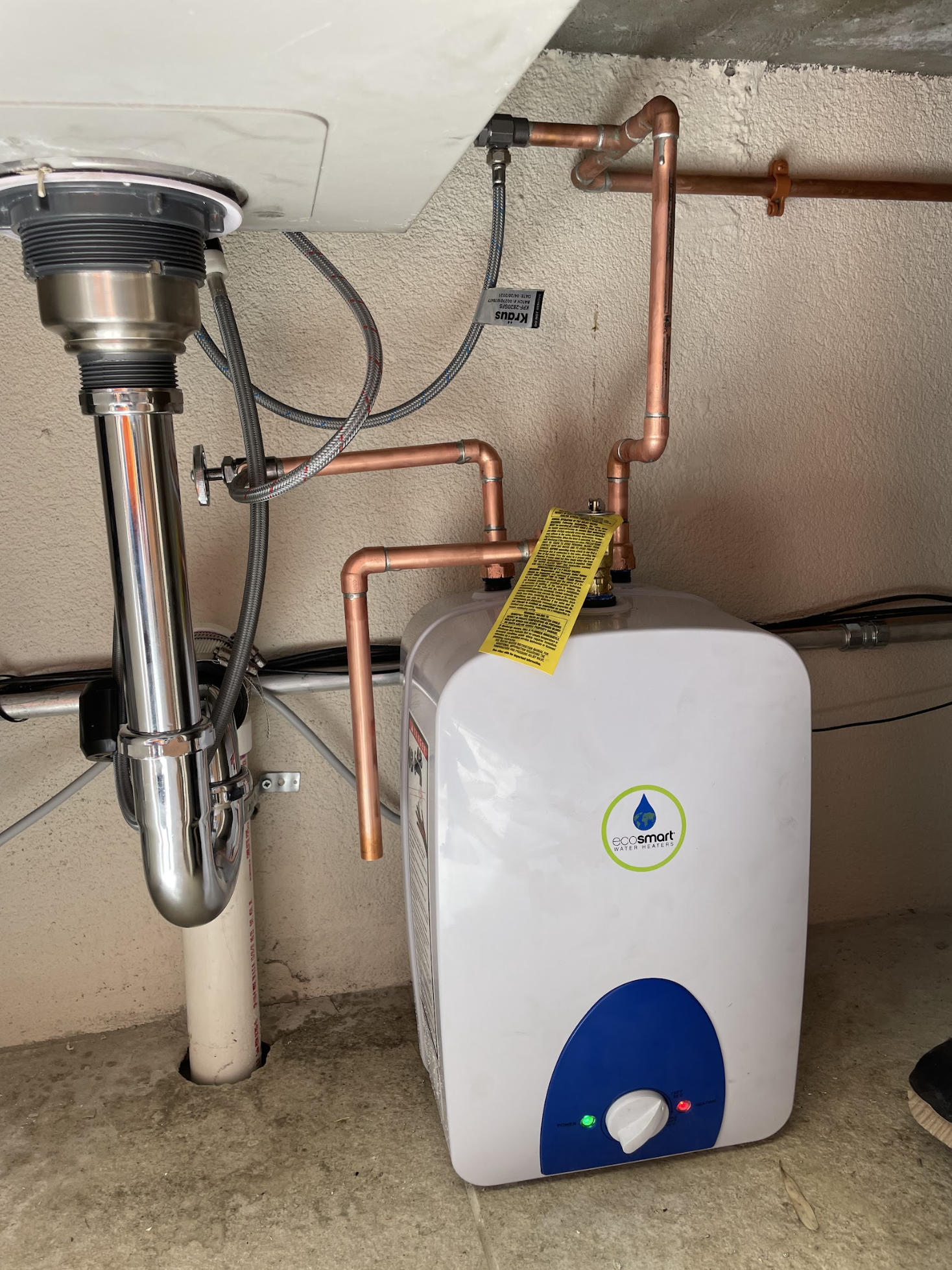
We installed a 6-gallon point-of-use electric unit under the bathroom vanity. Shut the cold supply branch, tapped a cold feed to the unit inlet, connected the unit outlet to the hot inlet of the faucet. Properly trapped the condensate drain connection. The unit fits in the cabinet using the existing 120V outlet. The third-floor tenant now has hot water within eight seconds of turning on the tap. The building's main water heater still serves the rest of the building normally. No re-piping required, no new electrical circuit. Unit was a Bosch ES4. Compact enough to fit in a standard 18-inch base cabinet alongside the drain lines. Thermostat set to 115 degrees at the unit output.
Call or send a message. We're based in Ridgewood — we know these buildings.