WE PIPE LLC
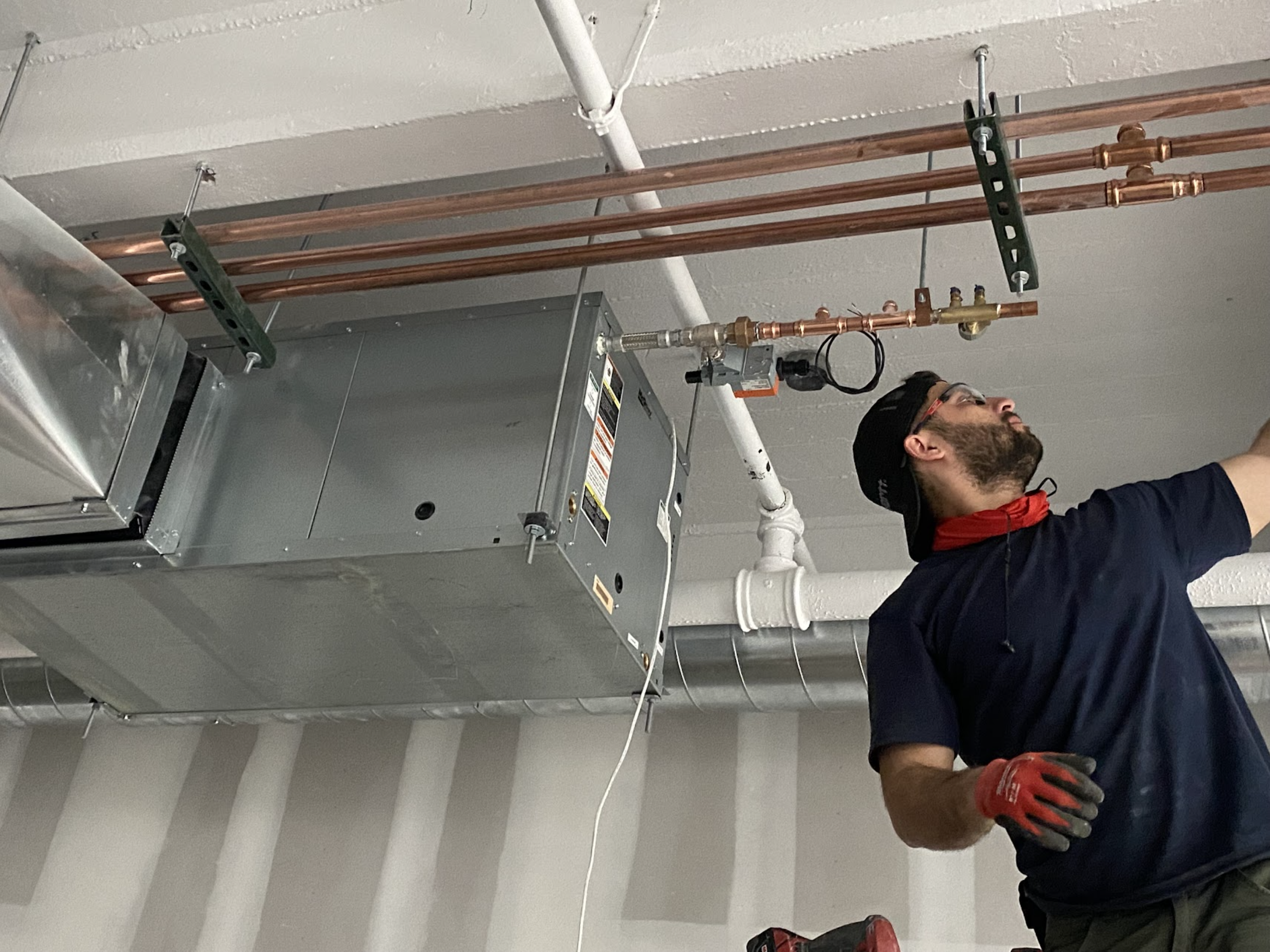
Fan coil unit installation in a Glendale commercial space involves extending copper supply and return lines from the building system, installing shutoff and balancing valves at each unit, running a properly trapped condensate drain to an approved discharge point, and coordinating with the electrical and controls trades for the thermostat wiring. The piping work, sizing, valve placement, and trap depth, is what determines whether the system runs quietly and efficiently long-term.
A commercial tenant in Glendale was upgrading from baseboard heating to a ceiling-mounted fan coil system for better temperature control. The space had existing copper supply from the building system but the branches needed to be extended to the new unit locations, and the condensate drain had to be run to an approved point of discharge. The gc had left the mechanical connections for last. The original supply branches were also missing isolation valves. To service any unit, the building engineer would have had to shut down the whole loop.
We extended the copper supply and return from the existing building branches, installed shutoff and balancing valves at each unit, and ran the condensate drain to the building's floor drain. Each unit got a proper trap on the condensate line to prevent air locks. Pressure tested all connections before the ceiling closed. The system came up on the first try, no leaks, proper flow at all zones. Condensate trap depth sized at 1.5 times the unit's rated static pressure. Prevents air lock at the trap seal on ceiling-mounted units where the drain runs several feet below.
Call or send a message. We're based in Ridgewood — we know these buildings.